
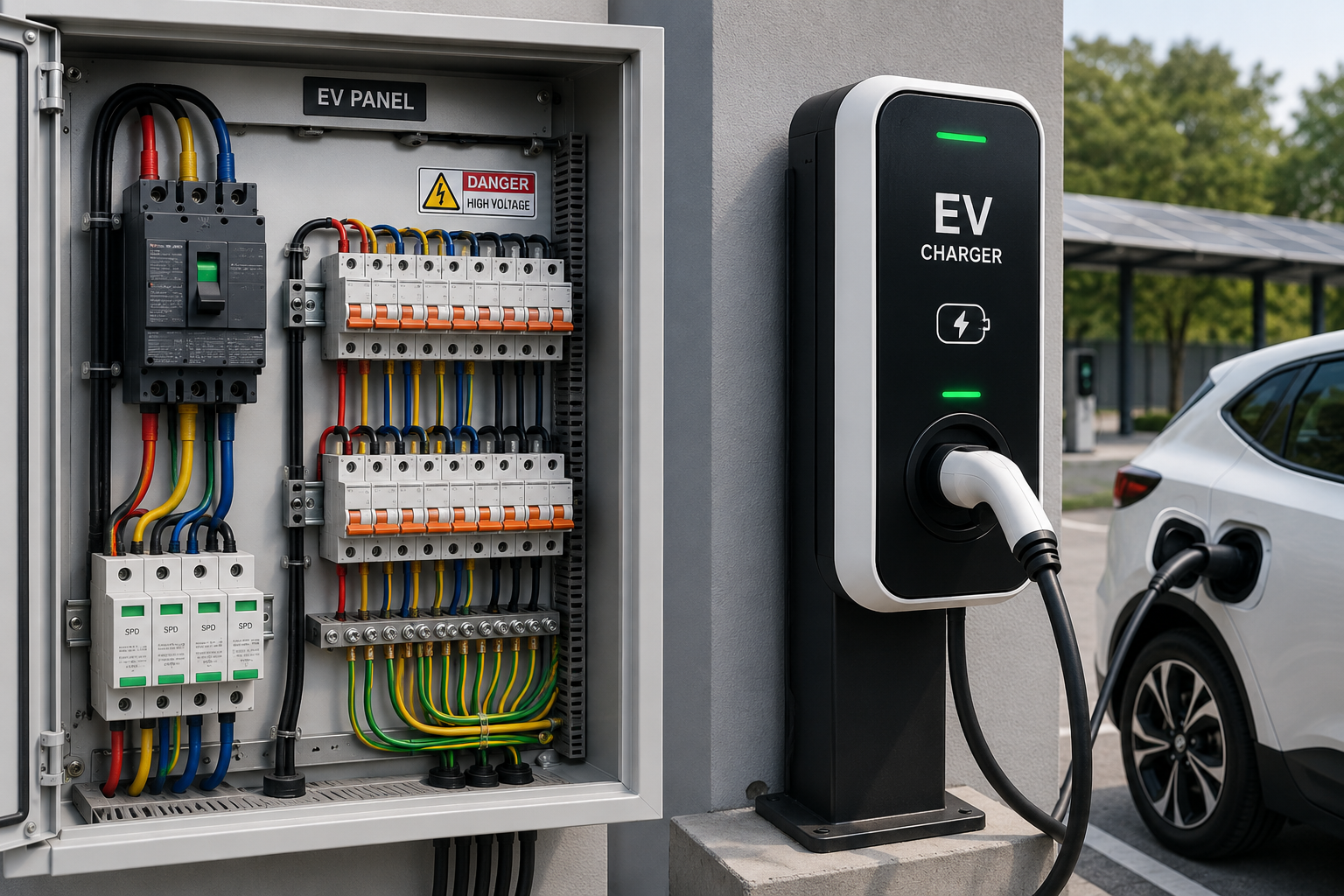
For many electric vehicle owners, one of the biggest lifestyle changes happens at home. Instead of visiting a fueling station whenever energy runs low, drivers can recharge their vehicle while it sits in the garage or driveway. That shift can turn overnight parking into useful charging time and make daily transportation easier to manage.
Homeowners searching for EV charger installations near me should consider the installation as a long-term electrical improvement rather than simply another household addition. The right setup depends on electrical capacity, driving patterns, parking arrangements, property layout, and how the household’s transportation needs may change over time.
Every driver has different habits. Some vehicles travel relatively short distances each day, while others cover much longer routes. Likewise, one vehicle might remain parked overnight for many hours, while another is frequently used throughout the day.
Understanding these patterns is an important first step.
Think about when the vehicle normally arrives home and when it leaves again. The hours between those times represent the typical charging window.
For many households, overnight parking provides a substantial amount of time. That means planning should focus on matching charging requirements with actual driving habits rather than automatically pursuing the highest possible charging capability.
When researching EV charger installations near me, having this information available can make conversations with an electrician more productive.
An EV becomes another significant electrical load within the household. Before adding that load, the existing electrical system needs to be evaluated.
An electrician can review the electrical panel, existing circuits, major electrical loads, available capacity, and other relevant conditions.
Two homes that look similar from the outside can have very different electrical requirements.
One property might already support several major electrical loads, while another may have fewer demands. Renovations and previous electrical modifications can create additional differences.
As a result, EV charger installations near me should be planned around the actual electrical conditions within each property rather than a one-size-fits-all approach.
The distance and physical route between the electrical panel and charging location can influence installation planning.
For example, the panel may be located close to an attached garage, or it may be considerably farther from the driveway. Walls, finished areas, property configuration, and accessibility can affect how electrical wiring reaches the charging point.
A visually convenient location is not always the most practical electrical location.
Before deciding exactly where charging equipment should be positioned, consider both the vehicle and the wiring route. Professional assessment can help balance everyday convenience with the property’s electrical configuration.
Charging equipment is used repeatedly, so small details matter.
Think about where the vehicle’s charging port is positioned when parked normally. Consider whether the cable can reach comfortably without being stretched across busy areas.
If drivers must constantly reposition the vehicle or navigate around a poorly placed cable, the installation may become inconvenient over time.
Homeowners comparing EV charger installations near me should therefore evaluate placement from the perspective of everyday use, not just installation day.
Not every household has an enclosed garage. Vehicles may be charged on driveways, beside a home, or in other outdoor parking areas.
Outdoor locations introduce additional considerations because electrical equipment may experience changing environmental conditions.
A professional should evaluate the proposed location, accessibility, exposure, electrical requirements, and surrounding area before installation.
Consulting a qualified home EV charging professional can help homeowners understand how the specific property layout affects installation planning.
Electric vehicle technology and household transportation needs continue to evolve. An installation planned exclusively around one current vehicle may not reflect how the property will be used several years from now.
That does not mean homeowners need to predict every technological development. Instead, they can think about realistic changes.
A household with two vehicles may eventually replace both with electric models.
If that possibility exists, mention it when discussing EV charger installations near me. An electrician can consider future electrical demand while assessing today’s installation.
Future vehicles may differ in size, charging-port location, or normal parking position.
Choosing a charging location with reasonable flexibility can make the setup more practical if the household changes vehicles later.
EV charging should not be treated like adding an ordinary household appliance without considering the broader electrical system.
Circuit requirements, wiring, electrical load, connections, and protection all need appropriate planning. Attempting to bypass professional evaluation can overlook important conditions within the existing electrical infrastructure.
A qualified electrician can determine how the charging setup should integrate with the property rather than viewing it as an isolated piece of equipment.
Homeowners can make the planning process easier by preparing several questions.
Ask whether the existing electrical capacity is suitable for the proposed charging arrangement. Discuss the preferred parking location and whether another location might offer practical advantages.
It is also worth asking how future electrical changes could affect the setup.
If you expect to renovate, add significant electrical equipment, or purchase another electric vehicle, sharing those plans provides a more complete picture of future demand.
The best home charging arrangement is not necessarily the most complicated one. It is the setup that works reliably with the driver’s routine, the property’s electrical system, and the household’s realistic future requirements.
When researching EV charger installations near me, consider the entire experience—from parking the vehicle and connecting the cable to the available charging time and future transportation plans.
Professional electrical assessment, thoughtful placement, and realistic long-term planning can help create a charging arrangement that remains practical well beyond the first day of use. With these factors addressed, home charging can become an effortless part of owning and driving an electric vehicle.