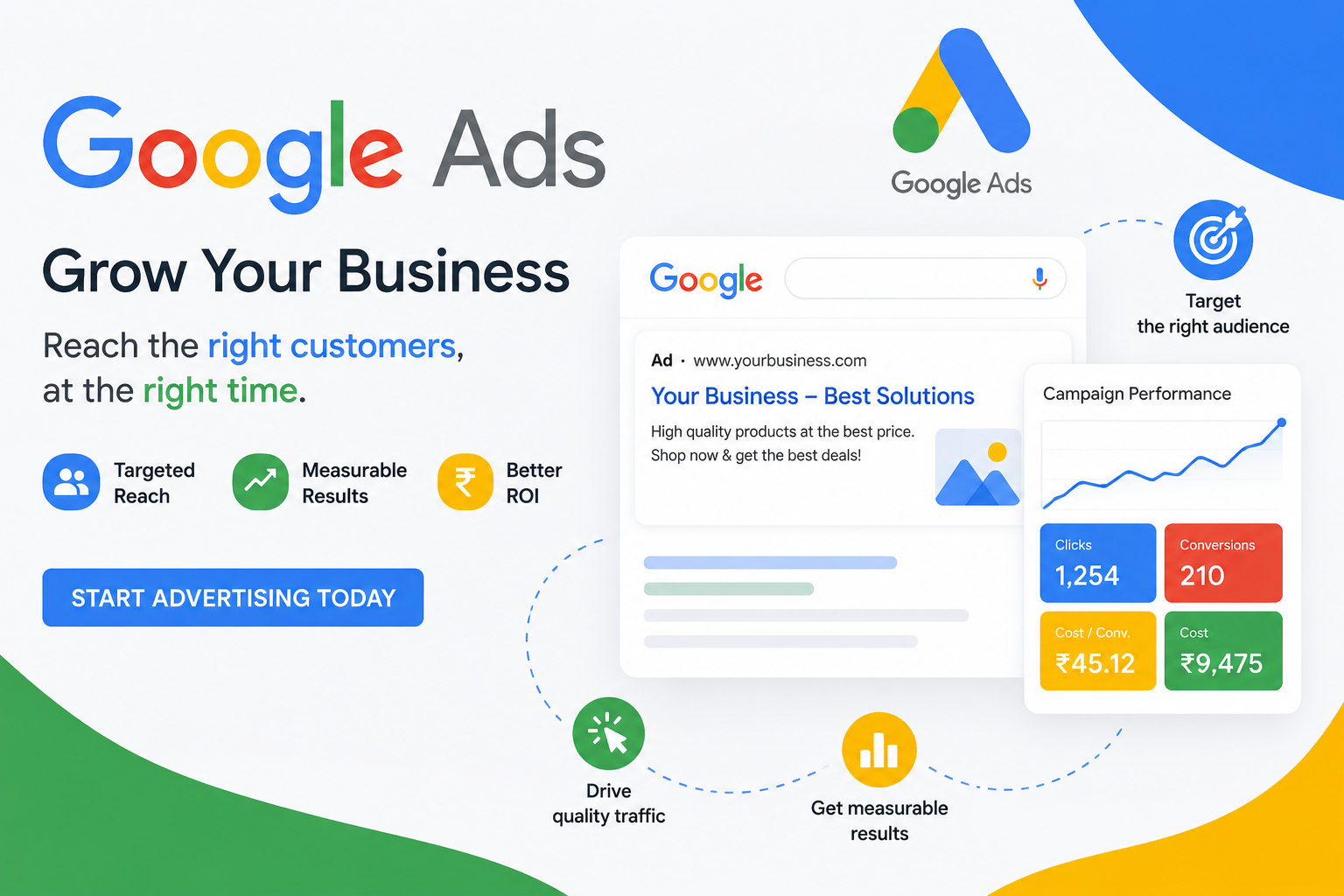
Paid search can place a business in front of potential customers at the exact moment they are looking for relevant information. That immediacy makes search advertising powerful, but it also creates competition. Without careful targeting, compelling messaging, accurate tracking, and continuous optimization, advertising budgets can quickly be spent on clicks that provide little business value. A skilled google ads agency can help create campaigns focused on reaching relevant audiences and generating measurable actions.
Successful paid search is not simply about attracting more visitors. It is about understanding what people want, matching advertising messages with those needs, and creating a smooth journey from search to conversion.
Every advertising campaign needs a specific purpose.
Some businesses want qualified enquiries, while others may focus on calls, registrations, bookings, or another valuable customer action. Defining the objective helps determine how campaigns should be structured and measured.
A google ads agency should establish these priorities before choosing keywords or writing advertisements.
Clicks indicate that an advertisement captured someone’s attention, but they do not necessarily represent success.
A campaign could generate substantial traffic without producing meaningful outcomes. This often happens when targeting is too broad or when advertisements attract users whose intentions do not match the business.
A google ads agency should therefore evaluate clicks alongside conversions, lead quality, and other relevant performance indicators.
Keyword research is central to paid search, but search volume alone should not determine targeting decisions.
The wording of a query can reveal where someone is in the decision-making process. Broad informational searches may indicate early research, while specific commercial phrases can suggest stronger intent.
A google ads agency can organize keywords according to these differences and allocate attention toward searches most closely aligned with campaign objectives.
Knowing which searches to avoid is just as important as identifying which searches to target.
Advertisements can sometimes appear for queries that include relevant words but represent completely unrelated needs. Negative keywords help prevent those mismatches.
Regularly reviewing actual search terms allows a google ads agency to identify irrelevant patterns and refine targeting over time.
This can improve traffic quality without relying solely on higher advertising expenditure.
Well-organized campaigns make advertising more relevant and easier to manage.
Closely related keywords can be grouped together so advertisements address specific needs. Landing pages can then continue the same message after a visitor clicks.
A google ads agency should structure campaigns according to logical themes, geographic areas, audience needs, or business objectives.
Someone searching for a specific solution should see an advertisement that reflects that intent.
Generic messages may receive less attention because they fail to demonstrate immediate relevance. Clear headlines and concise descriptions can show users why the advertisement relates to their search.
Consistency should continue on the landing page. A major disconnect between the advertisement and destination page can create confusion and reduce conversion potential.
Businesses serving specific areas do not always need to advertise equally across a broad region.
Location targeting can concentrate campaigns on areas where relevant customers are more likely to be found. Performance can also be reviewed by geographic segment to identify differences in customer behaviour.
For locally focused businesses, paid search can work alongside a strong local business map presence to create multiple opportunities for discovery.
A google ads agency should ensure geographic targeting reflects actual service areas and campaign goals.
Winning a click is only the beginning.
Visitors expect the landing page to provide information directly related to what they searched for. If the page feels irrelevant, loads slowly, or makes the next step difficult, users may leave.
A google ads agency should evaluate landing pages as part of campaign optimization rather than treating them as separate from advertising.
Landing pages should make the intended action easy to understand.
Clear headings, concise information, intuitive layouts, mobile usability, and focused calls to action can help visitors move forward.
Forms should request information that is genuinely necessary. Excessive fields can create unnecessary barriers, especially for mobile users.
Improving these details can increase the value of traffic already being generated.
Paid search provides the opportunity to learn from real audience behaviour.
Different headlines, descriptions, keyword groups, landing pages, and targeting approaches can produce different outcomes. Testing allows businesses to identify what resonates instead of relying on assumptions.
A google ads agency should approach optimization as an ongoing process.
Randomly changing several campaign elements simultaneously can make results difficult to interpret.
Structured testing provides clearer insights. A team might compare different messaging approaches or evaluate whether a revised landing page improves conversion behaviour.
The findings can then inform future decisions.
Advertising platforms provide large amounts of data, but not every number deserves equal attention.
Impressions indicate exposure, while clicks reveal engagement. Conversion rate, cost per meaningful action, search-term quality, and qualified lead volume can provide deeper insights into campaign effectiveness.
A google ads agency should connect these measurements with the original campaign objectives.
This creates accountability and makes optimization decisions easier to explain.
Paid search can create valuable visibility when campaigns reach the right people with relevant messages at the right moment. Achieving that requires more than choosing popular keywords and launching advertisements.
A capable google ads agency can combine intent-focused keyword research, thoughtful campaign structure, geographic targeting, persuasive messaging, landing page optimization, testing, and meaningful performance measurement. By concentrating on customer relevance instead of clicks alone, businesses can build paid search campaigns that become increasingly informed, efficient, and aligned with sustainable growth.