A technician’s productivity depends on more than technical knowledge. Field employees also need accurate job details, clear instructions, timely schedule updates, and an efficient way to record what happened during each visit. When that information is scattered across paperwork, calls, emails, and separate records, valuable working time can disappear into administrative tasks.
A field service mobile app can place important operational information directly in the hands of technicians while they are working. Instead of treating the office as the primary source of every update, mobile access allows field employees to stay informed throughout the day.
This approach can help technicians arrive better prepared, reduce unnecessary interruptions, simplify documentation, and create a more efficient journey from one assignment to the next.
The efficiency of a field visit often depends on what happens before the technician arrives.
A worker who knows only the customer address and a short description may need additional clarification before beginning. Missing information can lead to phone calls, delays, or uncertainty at the job site.
A field service mobile app can give technicians convenient access to relevant job details before they start work.
Technicians may benefit from reviewing appointment notes, reported issues, previous information, or special instructions in advance.
This context allows them to approach the assignment with a clearer understanding of what may be required.
Better preparation does not guarantee that every job will be straightforward, but it can eliminate avoidable delays caused by missing information.
Field technicians may complete several appointments across different locations during a single day.
Keeping track of changing schedules through printed documents or individual messages can become difficult, especially when priorities change.
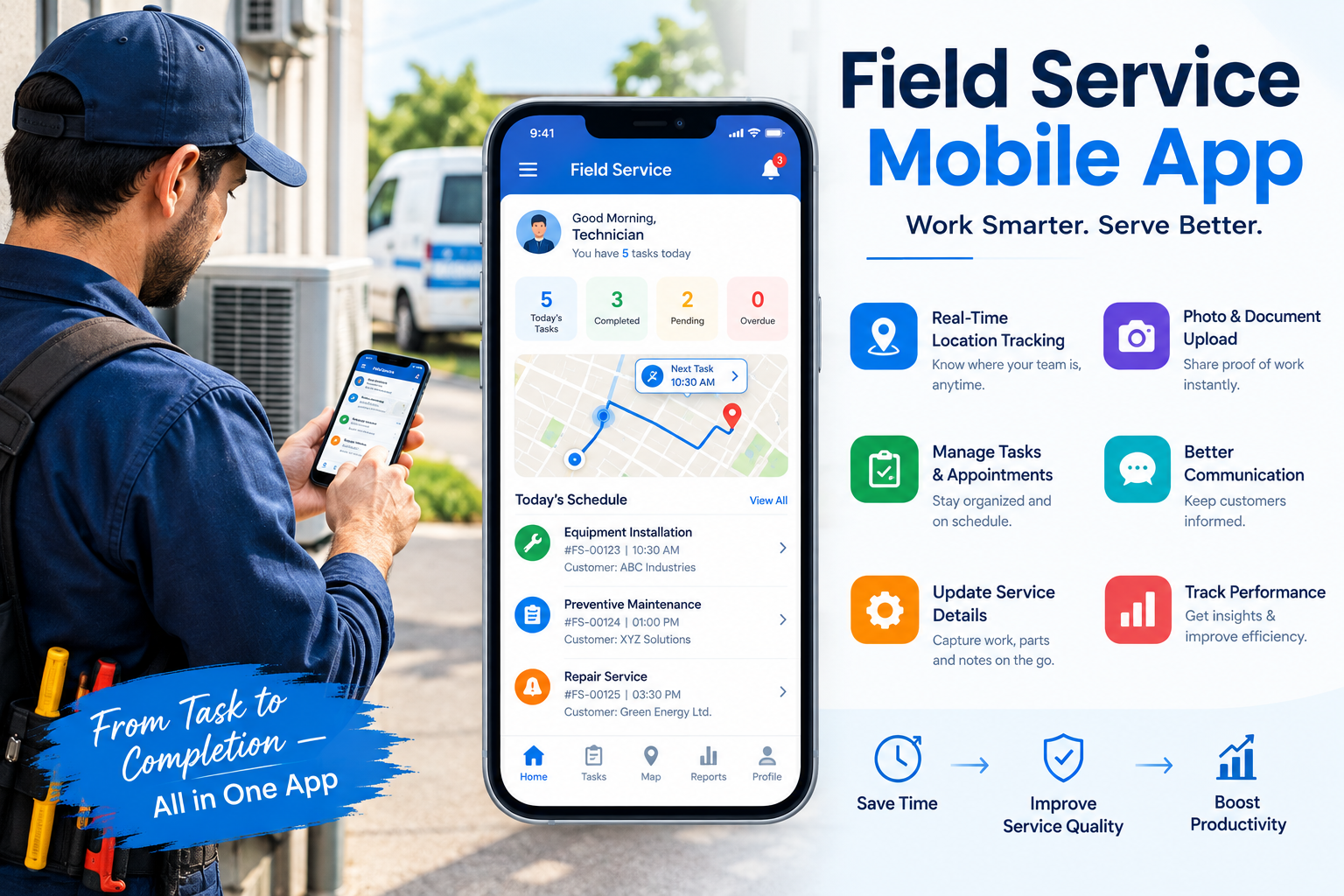
A field service mobile app can provide a clearer view of current assignments.
Uncertainty between jobs creates wasted time.
If technicians must call the office after every appointment to learn where they should go next, both the technician and dispatcher lose productive minutes.
Easy access to updated scheduling information allows employees to move more smoothly between assignments.
This becomes particularly valuable during busy periods when dispatch teams are coordinating many technicians simultaneously.
Field schedules are rarely static.
Customers cancel. Urgent work arrives. Existing assignments run longer than expected. Dispatchers may need to reorganize technician workloads during the day.
Technicians need to receive these changes quickly and clearly.
A field service mobile app can support faster access to revised assignments and updated information.
Schedule changes communicated through several calls or messages can be misunderstood.
An employee might overlook an update or continue working from an earlier version of the schedule.
Keeping current information accessible through a consistent mobile workflow can make changing priorities easier to understand.
Paper forms can create unnecessary administrative effort.
Technicians may write notes at the customer location and later transfer those details into another record. Paperwork can also become difficult to organize when employees complete multiple assignments each day.
A field service mobile app can support digital documentation closer to the point where work happens.
Information is usually easier to document immediately after an activity than several hours later.
Technicians can record relevant observations, completed tasks, or job outcomes while the details are still fresh.
This approach can improve record consistency while reducing the amount of administrative work waiting at the end of the day.
Entering the same information multiple times is an inefficient use of employee time.
A technician might complete one record in the field, while an office employee later transfers the same details into another system.
Every additional manual step also increases the possibility of errors.
A field service mobile app can help create a more direct flow of information between field activities and office processes.
Digital field records can be easier for office employees to review than handwritten documents.
Clearer information can reduce the time spent interpreting notes, asking technicians for clarification, or correcting incomplete records.
As job volumes increase, reducing even small administrative tasks can create meaningful efficiency gains.
Technicians should not need constant assistance from the office for routine information.
Frequent calls to dispatchers interrupt both parties and can slow the wider operation.
A field service mobile app can provide field employees with access to information they may otherwise need to request manually.
Some situations genuinely require discussion with office teams, particularly when a technician encounters an unusual issue.
However, basic questions about appointment details or routine instructions should not consume unnecessary communication time.
Giving technicians better access to standard information allows conversations to focus on situations where collaboration adds real value.
Office teams need to understand how field work is progressing.
Without timely updates, dispatchers may have to contact technicians individually before making scheduling decisions.
A field service mobile app can help technicians communicate job progress through a more consistent process.
Knowing whether assignments are progressing as planned can influence the rest of the schedule.
If one technician encounters a significant delay, dispatchers may need to adjust later appointments.
Earlier visibility gives planners more time to evaluate alternatives and limit disruption.
This can make the entire field operation more responsive.
Customers often judge an organization through the technician standing in front of them.
An employee who arrives informed and prepared creates a different impression from one who needs to repeatedly contact the office for basic details.
Mobile access can help technicians begin appointments with greater context.
Customers can become frustrated when they must repeat information they already provided.
If relevant details are available before the visit, technicians can approach conversations with a better understanding of the request.
That continuity can make the service experience feel more organized and professional.
As field teams grow, maintaining consistent processes becomes increasingly difficult.
Individual technicians may develop different methods for recording information or managing daily assignments.
A field service mobile app can support a common workflow across the workforce.
Structured digital processes can help technicians remember required administrative activities during each assignment.
Consistency becomes particularly useful when new employees join or when teams operate across multiple territories.
Instead of relying entirely on individual habits, organizations can create repeatable field practices.
Every field appointment produces operational information.
Job duration, completion patterns, delays, and other activities can help managers understand how field operations perform.
The quality of these insights depends on the quality of the information being recorded.
A field service mobile app can support more timely and consistent field documentation.
Managers can use reliable records to identify recurring operational challenges.
Certain assignments may regularly require more time than planned, or specific workflows may create unnecessary administrative effort.
Recognizing these patterns gives organizations an opportunity to refine future processes.
Technicians work most effectively when information moves with them. They need clear schedules, relevant job details, timely updates, and efficient ways to document completed activities without relying on constant communication with the office.
A field service mobile app can bring these capabilities into the technician’s everyday workflow. It can reduce dependence on paperwork, minimize duplicate administration, improve preparation, and make schedule changes easier to manage.
The result is a more connected way of working. Technicians can spend less time searching for information and handling routine administrative tasks while focusing more attention on completing field assignments efficiently.
For organizations managing mobile workforces, giving technicians better access to information at the point of service can create meaningful improvements in productivity, consistency, and day-to-day operational control.